
Grand Canyon Rock Layers |
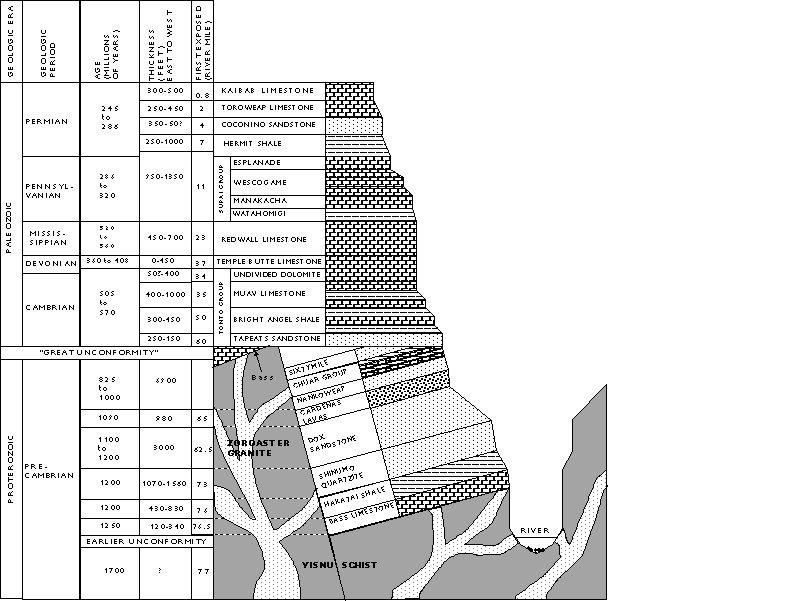
The following mnemonic sentence provides an easy way to remember the primary
rock layers in the Grand Canyon:
The only primary layer that is
missing here is the Vishnu Schist which you
will simply have to remember to add.
-
Paleozoic Strata
- Kaibab Limestone - This layer averages about 250
million years old and forms the surface of the Kaibab and Coconino Plateaus.
It is composed primarily of a sandy limestone with a layer of sandstone
below it. In some places sandstone and shale also exists as its upper layer.
The color ranges from cream to a greyish-white. When viewed from the rim
this layer resembles a bathtub ring and is commonly referred to as the
Canyon's bathtub ring. Fossils that can be found in this layer are brachiopods, coral, mollusks, sea lilies, worms and
fish teeth.
- Toroweap Formation - This layer averages about 255
million years old and is composed of pretty much the same material as the
Kaibab Limestone above. It is darker in color, ranging from yellow to grey,
and contains a similar fossil history.
- Coconino Sandstone - This layer averages about 260
million years old and is composed of pure quartz sand, which are basically
petrified sand dunes. Wedge-shaped cross bedding can be seen where
traverse-type dunes have been petrified. The color of this layer ranges from
white to cream colored. No skeletal fossils have yet to be found but
numerous invertebrate
tracks and fossilized burrows do exist.
- Hermit Shale - This layer averages about 265
million years old and is composed of soft, easily eroded shales which have
formed a slope. As the shales erode they undermine the layers sandstone and
limestone layers above which causes huge blocks to fall off and into the
lower reaches of the Canyon. Many of these blocks end up in the side
drainages and down on the Tonto
Platform. The color of this layer is a deep, rust-colored red. Fossils
to be found in this layer consist of ferns, conifers and other plants, as
well as some fossilized tracks of reptiles and amphibians.
- Supai Formation - This layer averages about 285
million years old and is composed primarily of shale that is intermixed with
some small amounts of limestone and capped by sandstone. The limestone
features become more and more prominent in the western regions of the
Canyon, leading one to believe that that region was more marine. The eastern
portions where probably a muddy river delta that fed into an ancient sea.
The color of this layer varies from red for the shale to tan for the
sandstone caps. Numerous fossils of amphibians, reptiles and terrestial
plants exist in the eastern portion which are replaced by marine fossils as
you move westward.
- Redwall Limestone - This layer averages about 335
million years old and is composed of marine limestones and dolomites. This
is probably the most prominent rock layer in the Canyon as it usually forms
a sheer cliff ranging from 400-500 feet in height, which has become a
natural barrier between the upper and lower regions of the Canyon. The only
way though this barrier is in areas where the rock has faulted and broken
apart to form a slope which can be climbed upon. The deep reddish color of
this layer is caused by iron oxides leaching out of the layers above it and
staining its outward face. Behind the reddish face the rock is a dark
brownish color. Numerous marine fossils can be found in the Redwall
Limestone including brachiopods, clams, snails, corals, fish and trilobites.
Many caves and arches can also be seen in the Redwall.
- Temple Butte Limestone - This layer averages about
350 million years old and is composed of freshwater limestone in the east
and dolomite in the west. In the eastern Grand Canyon this layer occurs
irregularly and only then by way of limestone lenses that fill stream beds
that have been eroded into the underlaying Mauv Limestone. Apart from these
channels, which are quite large in places, the Redwall Limestone sits
directly atop the Mauv Limestone. The Temple Butte Limestone is quite
prominent, however, in the western regions and forms massive cliffs hundreds
of feet high. The color of this layer ranges from purplish in the eastern
regions to grey or cream colored in the west. The only fossils to be found
in the eastern region are bony plates that once belonged to freshwater fish.
In the western region there are numerous marine fossils.
- Tonto Group - These layers average about 515 to
545 million years old.
- Muav Limestone - This layer averages about 515
million years old and is composed primarily of limestone that is separated
by beds of sandstone and shale. The Mauv Limestone layer is much thicker
in the western areas of the Canyon than it is in the east. Its color is
grey and it does not have much in the way of fossils, some trilobites and
brachiopods.
- Bright Angel Shale - This layer averages about
530 million years old and is composed primarily of mudstone shale. It is
also interbedded with small sections of sandstone and sandy limestone. The
retreat of the Canyon rim is attributed primarily to the erosion of this
layer which forms the top of the Tonto
Platform. The plateau is much wider in the eastern portions of the
Canyon where the Bright Angel Shale contains less sand and is more easily
eroded. The color of this layer varies with its compostion but it is
mostly various shades of green with some grey, brown and tan thrown in
here and there. Fossils to be found in this layer consist of marine
animals such as trilobites and brachiopods.
- Tapeats Sandstone - This layer averages about
545 million years old and is composed of medium-grained and coarse-grained
sandstone. Ripple marks formed by ocean waves of an early Cambrian sea are
common in the upper layer. The Tapeats is similar to the Redwall in that
it forms a barrier between upper and lower reaches of the Canyon that can
only be traversed where a fault has caused its collapse. The color of this
layer is dark brown and it contains fossils of trilobites. brachiopods,
and trilobite trails.
-
Great Unconformity
- This non-layer indicates an age in which no
sediments can be found. It is indicative of a time when an advancing sea
eroded away the sediments that should be here.
-
Late Pre-Cambrian Rocks
- Chuar Group - These layers average about 825 to
1,000 million years old and is composed of the following:
- Sixtymile Formation - This tan colored layer is
composed primarily of sandstone with some small sections of shale.
- Kwagunt Formation - This layer is composed
primarily of shale and mudstone with some limestone. In the area of Carbon
Butte the lower layer also contains a large section of reddish sandstone.
The shales within this layer are black and the mudstones range from red to
purple. Fossils to be found in this layer are those of stromatolites, the
oldest fossils to be found anywhere in the Grand Canyon.
- Galeros Formaton - This layer is composed of
interbedded sandstone, limestone and shale. The color is primarily
greenish with some of the shales ranging from red to purple. Fossil
stromatolites also exist in this layer.
- Nankoweap Formation - This layer averages about
1,050 million years old and is composed of a coarse-grained sandstone. This
layer is exposed only in the eastern section of the Canyon and belongs to
neither the Chuar or Unkar groups because it is bounded on both sides by
unconformities.
- Unkar Group - These layers average about 1,100 to
1,250 million years old.
- Cardenas Lavas - This dark brown layer is
composed of basaltic lava flows.
- Dox Sandstone - This layer averages about 1,190
million years old, is composed of sandstone interbedded with shale, and
occurs primarily in the eastern regions of the Canyon. Its color varies
from red to orange and its fossil record contains stromatolites and algae.
- Shinumo Quartzite - This layer averages about
1,200 million years old and is composed of sandstone. This layer is only
exposed in a few sections in the Canyon. Its color can be deep red, brown,
purple or white.
- Hakatai Shale - This layer averages about 1,200
million years old and is composed primarily of shale with some sandstone.
The color is a very bright orange-red red and is the layer that gives Red
Canyon its name.
- Bass Formation - This layer averages about 1,250
million years old and is composed primarily of limestone with some
interbedded shale. It is greyish in color and its fossil record consists
of stromatolites.
-
Pre-Cambrian Unconformity
- This non-layer represents a time where the
mountains that had grown here were gradually eroded away to form a plain.
-
Early Pre-Cambrian Rocks
- Vishnu Schist and Zoroaster Granite - This
layer averages about 1,700 to 2,000 million years old and consists of mica
schist. These were originally sediments of sandstone, limestone and shale
that were metamorphosed and combined with metamorphosed lava flows to form
the schist. This layer along with the Zoroaster Granite were once the roots
of an ancient mountain range that could have been as high as todays Rocky
Mountains. The mountains were eroded away over a long period of time and new
sediments were they deposited over them by advancing and retreating seas.
The color of this layer is dark grey or black.
| Copyright © Bob Ribokas, 1994-2000, all
rights reserved. This publication and its text and photos may not be
copied for commercial use without the express written permission of
Bob
Ribokas.
| |